
richelle andrae
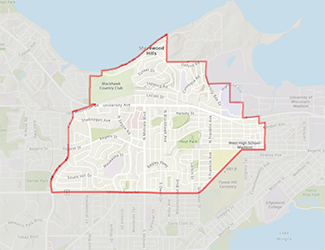
Thank you for the opportunity to serve District 11, which includes most of Hill Farms, Shorewood Village, and the neighborhoods immediately east of Midvale Blvd. I’ve lived in Madison since 2013, and reside near West High School. I’ve experienced our community through the eyes of a student, a young professional working in non-profit, an academic, and a volunteer. During the day, I am an advocate for safety net clinics in Wisconsin, working with state policymakers and partners to ensure that all residents have access to quality health care, regardless of income or insurance status. I’ve previously worked on local public health evaluation projects, rural workforce development, and Medicaid policy. After serving an AmeriCorps service term in California, I returned to Wisconsin and worked directly with underserved teens in Madison high schools, helping them find and keep their first jobs.
On the County Board, I chaired the Public Protection & Judiciary Committee from 2022 to 2026, which has oversight for the Dane County Sheriff's Office, District Attorney's Office, Emergency Management, 911 Call Center, Courts, Pre-Trial Services, Medical Examiner, and more. I now serve as Vice-Chair of the Personnel & Finance Committee which has primarily jurisdiction over important budget decisions.
A few of my "success stories" on the Board include navigating the complex jail consolidation project, improving constituent outreach by encouraging implementation of a successful blog system for Supervisors, and budget amendments to improve the pay structure for staff attorneys to support the timely service of justice, expunge Birth Recovery Costs (learn more about this policy issue here), and fund a local Food System Action Plan.
When I’m not at work or engaged in Board activities, you can find me on a walk enjoying the oaks in the Speedway cemetery with my rescue pup, Roux, or paddling my kayak on the Yahara. I studied Spanish at UW-Madison during my undergrad, and earned a Masters in Public Affairs from the La Follette School, focusing on health policy and administration. Please reach out at any time and I look forward to working with you.
Neighbors,
As the temperature drops, I hope you are tucking in and taking care. I’m thinking of neighbors that are unsheltered, older, have mobility challenges, and those who are isolated as we head into the heart of winter. In recognition of the season of gratitude, I appreciate your continued engagement with local government, the open, welcoming spirit I see from district 11 residents, and how we all step up to care for each other in times of need. And times of need are upon us. If giving this season, I’m committed to buying local, donating to local-nonprofits, and checking on my older neighbors and encourage you to do the same.
This email has information about:
Visit at NewBridge
Right before the holidays, I took the opportunity to visit NewBridge, a local non-profit that provides services for older adults, for bingo and lunch in the Meadowood neighborhood. They offer bilingual programming and services (yes, “bingo” is the same in Spanish!) and provide excellent community supports to help older adults navigate services and stay connected. NewBridge receives county funds for various programs, and I also wanted to discuss how the enacted 2026 county budget will impact their work. In particular, I heard from neighbors about the value of transportation vouchers, meal services, and the welcoming community NewBridge provides for all. Check out NewBridge’s latest newsletter and their services: https://static1.squarespace.com/static/5e89efac99bce5033016f63f/t/69024cf9df268a7ef0221af0/1761758457161/11+November+2025+Newsletter.pdf.
Honoring Local Veterans & Veterans Services
In November, we honored Veterans Day and I have come to appreciate the powerful role our local Veterans Services Office (VSO) plays in navigating complex benefit programs and identifying options for local residents. I encourage you to review and share theses resources with any local veterans and their families. One major area that Dir. Connery highlighted recently is how many widows are entitled to benefits but not aware. They are proactively identifying individuals from obituaries and other public resources for proactive outreach, which is great, but we need help getting resources in front of eligible neighbors. Learn more about the VSO:
Recognizing Indigenous Peoples – and Canoes in District 11!
Recently we also recognized local tribal communities and have a few reasons to celebrate. First, there is a new art installation at the City of Madison that is worth checking out (photos attached in original email). Here’s a snippet of info from the full press release:
DANE COUNTY, Wis. — The Dane County Board of Supervisors on Thursday hosted a land acknowledgment and art dedication ceremony in the City-County Building, recognizing the past, present and future of Indigenous peoples and honoring the Ho-Chunk Nation. The event included the dedication of a permanent land acknowledgment plaque and the unveiling of new artworks celebrating Indigenous history, culture and resilience.
The newly unveiled artworks include a photographic portrait by Tom Jones, titled Cameryn Collins, from his “Unrelenting Spirits” series, and two wood sculptures donated from the Harry Whitehorse International Wood Sculpture Festival, including No More Stolen Sisters by Gene Delcourt. The permanent land acknowledgment plaque features language adopted by the county board in 2023 following consultation with members of the Ho-Chunk Nation.
A recording of the ceremony is available on the Dane County Board Facebook page. Members of the public are encouraged to visit the newly installed land acknowledgment plaque and the accompanying artworks, located in the first-floor lobby of the City-County Building at 210 Martin Luther King Jr. Blvd.
Following the ceremony, the county board introduced and approved 2025 RES-237, a resolution recognizing November 2025 as Indigenous Peoples’ Month. The resolution acknowledges November as a time to honor the history and continued heritage of survival, renewal and cultural preservation of Indigenous people; recognizes the 11 federally-recognized tribal nations in Wisconsin; and affirms the importance of remembering the historical truths of displacement, loss of life and oppression experienced by Indigenous people in the country, state and county.
Also, right here on the near west side of Madison, another new discovery highlights our local history of indigenous peoples. Read more from the Wisconsin Historical Society (it’s pretty amazing!):
Submerged Canoes in Lake Mendota Offer New Insights into Ancestral Traditions and Waterways
With 16 canoes now identified, Wisconsin Historical Society archaeologists are investigating theories spanning thousands of years of cultural history
MADISON, Wis. – Four years after locating and recovering a 1,200-year-old dugout canoe from Lake Mendota, Wisconsin Historical Society archaeologists and First Nations in the region have continued to wade into the history of the rich archaeological site in the heart of Wisconsin’s capitol city. The Wisconsin Historical Society retrieved another ancient canoe from the site in 2022—the oldest dugout canoe originating from the Great Lakes region at the time of recovery at 3,000 years-old—and has since identified 14 ancient canoes still submerged in the lakebed, six of which were located in the spring of 2025. As the two recovered canoes are nearing completion of a multi-year preservation process to ensure their long-term stability, with one of them slated for exhibition in the future Wisconsin History Center, historians are investigating the history behind the underwater site to help preserve and share the story with future generations.
Latest Findings
Wisconsin Historical Society maritime archaeologist Tamara Thomsen, in partnership with First Nations of Wisconsin and University of Wisconsin-Madison professor Sissel Schroeder, has been on a mission to chart the locations of more canoes in Lake Mendota since her unexpected finding of a 1,200 year-old dugout canoe in 2021. Working alongside various collaborators also including the USDA Forest Products Laboratory, efforts have allowed her to map the locations of 16 canoes to date, including the two retrieved in recent years, and identify the wood types and probable ages represented in samples taken from each of the ancient watercraft. Thomsen is now considering theories behind the grouped positions of the canoes as well as the selection of particular species of trees used to craft them.
“Archaeology is kind of like putting together pieces of a puzzle, and the more pieces you can find, the better you can start to form a picture of what was going on and why during a period of history,” said Tamara Thomsen, Wisconsin Historical Society Maritime Archaeologist. “We can’t go back in time to get answers to our questions, but we can examine the available data alongside knowledge from First Nations and cultural history to form theories to answer our questions.”
Of the 16 canoes identified, half were constructed of either red or white oak according to wood type analysis conducted on the samples by the USDA Forest Products Laboratory. The prevalence of oak—and particularly red oak, which is not typically used for watercraft due to its tendency to absorb water—prompted Thomsen to examine the reasoning behind its use for canoe building.
“When you look at the shoreline map with canoe locations charted, it’s clear that there are two distinctive groupings represented,” said Thomsen. “Looking at the tree species taxonomy, we wondered not just why certain trees were used by the builders but also why these canoes were situated in these two locations. Carbon dating from the samples told us that both spots were in use over thousands of years, and so we started to form theories as to why they were left where they were and why certain trees were used.”
Carbon dating, which provides a probable age range for each sample, indicates the oldest canoe is around 5,200-years-old while the most recent is around 700 years old. The oldest Lake Mendota canoe identified to date was likely crafted sometime around 3000 BCE, before the Great Pyramid of Giza was built in Egypt and around the time of the invention of writing in Sumer. Constructed of red oak, it is now the oldest dugout canoe recorded from the Great Lakes region and the third oldest in eastern North America.
Thank you all, and I look forward to seeing you around the neighborhood this winter. Stay warm,
In service,
Richelle Andrae
Dane County Board Supervisor District 11
Andrae.richelle@countyofdane.com