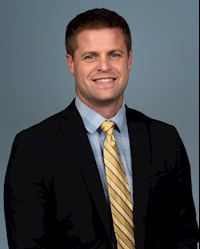
paula brandmeier
I graduated from SUNY at Stony Brook with a BS in Computer Science as well as a Commercial pilot’s license from the local flight school. My first job after college was as a software engineer, but it didn’t take long to realize I felt more at home in the sky than behind a desk. So, I joined the United States Air Force Reserves, where I flew C-141 cargo planes around the world as a pilot and aircraft commander.
That experience led me to a 40-year career with United Airlines, where I flew internationally as a wide-body Captain. Along the way, I experienced the ups and downs of the airline industry—after 9/11, when many airlines struggled, I even spent a few years working as a realtor in the Madison area.
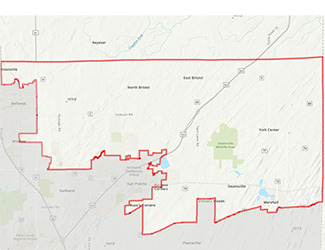
More than 25 years ago, my family and I chose Windsor as the place to call home and raise our three daughters. All three attended DeForest schools and went on to graduate from UW–Madison.
Giving back to my community has always been important to me. For over 16 years, I’ve served on the Token Creek Conservancy Committee, helping care for the land and waters that make our area so special. I’ve also spent more than a decade as a stream monitor with the Rock River Coalition, collecting water samples from Token Creek to support local conservation efforts. I serve as an election worker and have volunteered with Meals on Wheels, the McKenzie Center, and our local schools.
Today, I’m honored to be serving my first term as County Supervisor. I’m committed to listening, working hard, and doing my best to represent the people of this community.
Outside of work, you’ll usually find me in the garden, in the kitchen trying a new recipe, traveling, visiting family, scuba diving, skiing, on a yoga mat, or perhaps on the stage, trying my hand at singing and dancing in my new found interest in local theater.
Hello! I hope everyone has been enjoying our Wisconsin summer. As always, it seems to be flying by way too quickly.
One of the things I enjoy about being a Supervisor is the opportunities I have to get a behind-the-scenes view of the hard work that goes into making our community function. It also gives me a first hand look at how our tax dollars are invested to make Dane County a better place to live. Some recent examples:
I attended a regional housing summit where elected officials, developers, community and business leaders joined together to discuss the issue of housing affordability. Topics discussed included zoning, sustainability, financing, land use and a variety of housing options including mixed-use, rental, senior housing and accessory dwelling units(ADUs). It is definitely a complex issue and many ideas were discussed, but the two points that stood out to me were- We should build the housing we need, not necessarily just the housing we want. And…we need to streamline the permitting process which will help lower overall costs, incentivize builders and ultimately make projects more affordable.
I also toured the Henry Vilas Zoo where I have so many fond memories of afternoons spent with my girls at the zoo. We met with staff, veterinarians and a variety of people who care for both the animals and the zoo visitors. Some fun facts about the zoo:
It is one of the only 10 remaining free zoos in the country.
The zoo has the highest Association of Zoos and Aquariums(AZA) accreditation rating for standards of animal care, conservation, education and management.
The polar bears happily swim in a 50,000 gallon swimming tank.
The new solar-paneled shelter is part of the zoo’s broader efforts to incorporate renewable energy into its operation. It’s a great place to take a rest and is also a really nice event space that will provide an additional revenue source for the zoo.
All the animals at the zoo were not taken from the wild, but were born and raised at zoos.
Some of the food for the animals, like the 40 year old tortoises, Tom and Ricky’s favorite treat-hibiscus flowers, are grown on site.
The zoo is Dane County owned and is supported by community contributions and remains free to its hundreds of thousands of visitors every year.
I had the opportunity to visit the RCC Sexual Violence Resource Center which recently relocated to a new facility in the Rise development. RCC is a non-profit that does important work for survivors of all forms of sexual violence, providing services such as medical, legal advocacy and therapeutic help.
The new Men’s Shelter located near the DMV had an open house which I recently attended. It is scheduled to open September 1 and will provide a temporary safe place to sleep overnight. Private funding will be needed to eventually operate 24/7 and to provide services for recovery and a path to stable housing. See ShelterFriendsDaneCo.org for more information.
Last week I spent the day on an environmental tour hosted by the Southern Wisconsin Land and Water Conservation Association.
The first stop was the Nevin State Fish Hatchery. The hatchery dates back to 1875 and it’s a beautiful spot that is perfect for trout-rearing because of the abundance of cold(10.5 degreeC) spring water that naturally exists on site. They raise brook, brown and rainbow trout for stocking streams throughout Wisconsin. Unfortunately, budget cuts from the republican-led legislature and a failure to raise enough revenue from licensing fees have taken their toll. The Nevin hatchery is the only trout hatchery left in operation and fewer fish are raised there than ever before. And, they are understaffed and in need of major renovations. Some interesting points- only streams designated as Class II are stocked. Class I streams have enough naturally producing fish. Rainbows are easiest to raise, are fun to catch, but rarely reproduce in the wild and are not native to Wisconsin. And something to aspire to-once you reach the age of 94, your fishing license is free!
Next, we visited Four Winds, a farm focused on sustainability and regenerative growing practices. The farm has one of the largest plantings of kernza in Wisconsin. Kernza is a perennial grain that produces grain for several years and has really long(10ft+) roots. These characteristics result in less tilling, less soil erosion, increased water retention, better soil structure, less nitrates and nutrients contaminating the water and better wildlife habitat. Kernza can be used like other grains to make flour, breads and even beer!
We then visited a farm that was part of the Dane Demo farms. Monitoring equipment is installed at the edge of the field that captures and measures rain runoff. Researchers can compare how different farming practices affect soil erosion and water quality. We also saw a demonstration with an ingenious piece of equipment that simulates different rain events and measures the resulting run off from tilled, no tilled, cover crops and pasture land. The difference between the soil erosion and runoff from the tilled land versus the pastured land was significant.
The last stop was a solar farm where the utility company and farmer work together using sheep for vegetation management. Sheep are ideal candidates for this job because they are smaller than cows, don’t jump on things like goats, are good grazers who like the shade created by the solar panels. The land is kept in agricultural production and doesn’t need to be mowed-a win for farmers and a win for utility companies.
I have one last thought for all you backyard gardeners- Are you up to your ears in beans, cucumbers, tomatoes and zucchini? Consider donating them to your local food pantry. They will welcome your home grown produce!