
keith furman
Home : (608) 912-0000
Email : furman.keith@danecounty.gov
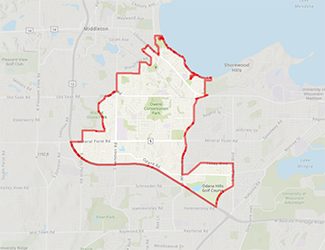
As District 10 Supervisor on the Dane County Board, Keith Furman brings extensive public service experience and deep roots in the Madison community. Before joining the Board in December 2024, Keith served on Madison's Common Council from 2018 to 2023, serving as Council President in his final year.
A technology consultant with significant leadership experience, Keith previously served as Chief Technology and Chief Strategy Officer at CenterX, a Madison-based healthcare technology company. His commitment to public service began in Hoboken, New Jersey, where he chaired the city's Planning Board.
Keith and his wife Sandi Reinardy, a Wisconsin native, have called Madison's Spring Harbor neighborhood home since 2013.
On May 11th, the Personnel & Finance Committee is expected to take up 2025 RES 414, a contract with ViaPath for Dane County Jail resident telephone and video visitation services. ViaPath was the runner-up from the January 2025 Request for Proposals (RFP). The full County Board is expected to consider the contract on Thursday, May 14th.
The board should reject it.
Not only do I think this contract is worse in key respects than the Smart Communications contract the board already rejected in September, but it is also the product of a flawed, unnecessarily rushed process that ignores the values the board and community has repeatedly expressed. We have time to do this right and we should.
Why This Matters: Communication Is Not a Luxury
Before getting into the contract details, I think it's worth stepping back to ask why this matters so much.
Research is clear and consistent: people who maintain strong contact with family and loved ones while incarcerated have better outcomes, including lower rates of reincarceration, better mental health, and smoother reintegration into the community. A phone call home isn't a privilege. It's a critically important tool for keeping families intact, which matters for reducing recidivism.
And yet routinely these calls are expensive, for people who are already in the most difficult circumstances of their lives. Jail residents typically have no income while incarcerated. Their families are often stretched thin, covering bond, attorney fees, lost wages, childcare, and transportation for visits on top of everything else. Every dollar charged for a phone call is a dollar pulled from families who can least afford it.
What makes this even more troubling is who we're talking about. The majority of people held in the Dane County Jail on any given day have not been convicted of any crime. They are awaiting trial. They are legally presumed innocent. They are detained, in many cases, simply because they cannot afford bail. To then charge them and their families for the basic human connection of a phone call compounds an already profound injustice. We are essentially taxing people for being poor and accused.
The county has an opportunity to treat communication as a basic service, the same way we treat access to water or medical care in our facilities. Other jurisdictions have done it. It doesn’t have to be an exorbitant expense. As we'll see below, ViaPath was eager enough to get this contract that they voluntarily added $68,000 in free minutes the moment we pushed back even slightly. That tells you there is room to further negotiate.
Contract Comparison: Worse Than What We Already Rejected
The board rejected the Smart Communications contract in September. Here is a summary of how that contract compares to what is now being proposed (full cost comparison here):
Proposed Smart Communications Contract (rejected September 2025):
The data protection improvement is real and worth acknowledging. But in nearly every other financial respect, this contract is a step backward. Smart Communications was going to pay the county hundreds of thousands of dollars annually to reimburse staff time. ViaPath pays nothing. Smart wasn't going to charge for basic tablet functions. ViaPath charges six cents a minute, a fee that falls disproportionately on residents with disabilities who rely on text-based communication. The one area where ViaPath outperforms, the free daily call, came only after the committee pushed back. And critically, the Sheriff's Department confirmed they never asked ViaPath whether there were savings available if the county paid for some or all of the communications (like a discount for purchasing in bulk). They asked one question, got one concession, and called it done.
How We Got Here: A Timeline of Missed Opportunities
The Sheriff's Department released an RFP for jail resident communications on January 22, 2025, but didn't come to the Public Protection and Judiciary Committee (PP&J) to discuss it until after it had already been released. The primary discussion at that February 25th meeting focused on a controversial mail scanning provision included in the RFP. (Results for the RFP were due on March 14, 2025.)
The department selected Smart Communications as the RFP winner and presented the contract to PP&J on June 17, 2025. The public response was overwhelming. Residents raised concerns about mail scanning, data privacy, the cost to families, and Smart Communications' ability to use inmate communication data to target families with advertising.
PP&J held a second meeting on June 30th specifically to address mail scanning. On July 22nd, the committee recommended denial, citing mail scanning, data sharing concerns, and the absence of any free communication option. The Personnel & Finance Committee followed with its own denial recommendation on August 11th.
Throughout that process, the county was told that mail scanning couldn't be removed for safety reasons, that data protection changes weren't possible, and that free communication was simply unaffordable. Then, on September 4th, the day the full board was set to vote, the Sheriff's Department quietly posted a new version of the contract that removed mail scanning entirely, with no redline, no change log, and no notification to the board or the public. The board postponed, reviewed the new contract, and on September 18th denied it. The board has since passed rules to prevent last-minute contract substitutions like that from happening again.
Six months later, on March 10th, 2026, PP&J was informed that rather than re-issuing an RFP, the Sheriff's Department had decided to negotiate directly with ViaPath, the runner-up. On March 24th, a ViaPath contract was presented to the committee. The public and committee immediately raised concerns primarily focused on ongoing charges to families, including the text messaging fee and its impact on people with disabilities. The committee asked the Sheriff to go back and request cost information if the county covered some or all of the communications.
ViaPath came back with one free daily call (up to ten minutes), and nothing else. The Sheriff's Department confirmed they never actually requested a cost breakdown for county-subsidized communication. The committee voted 3-2 to recommend approval, driven largely by concern about the uncertainty of running another RFP process.
Why We Should Do Another RFP, and Do It Better
The fear of another RFP process is understandable. But it isn't a good reason to accept a worse contract.
The original RFP results are now well over a year old. The market has changed. We know more about what we want and what's possible. We should absolutely be asking all vendors for their updated proposals, including those who weren't selected or didn’t participate in the original RFP. Accepting stale results from a flawed process doesn't protect the county. It just locks in the mistakes.
The first RFP also had significant gaps. It didn't adequately specify the board's values around free communication and costs to families,. We've since updated our ordinances on data privacy. We've had lengthy public debate about what the community actually expects. A new RFP, carefully drafted to reflect those values, would give vendors a clear target and give us a much stronger negotiating position than simply taking the runner-up and hoping for the best.
The new contract isn't scheduled to start until November. A focused, well-run RFP process with clear requirements around subsidized communication, tablet fees, and data protection can be completed in that window.
PP&J recommended approval not because ViaPath's contract is good, but because they were afraid of the alternative. That's not a reason to bind the county to a worse deal for five years. The board has repeatedly shown it is willing to hold the line when a contract doesn't reflect our values. This one doesn't.
-Keith F.
-------------------
Supervisor Keith Furman, District 10, Dane County, WI
furman.keith@danecounty.gov | 608-912-0000